How to Choose the Right Grease Lubricant:
Types, Applications & Caltex Greases
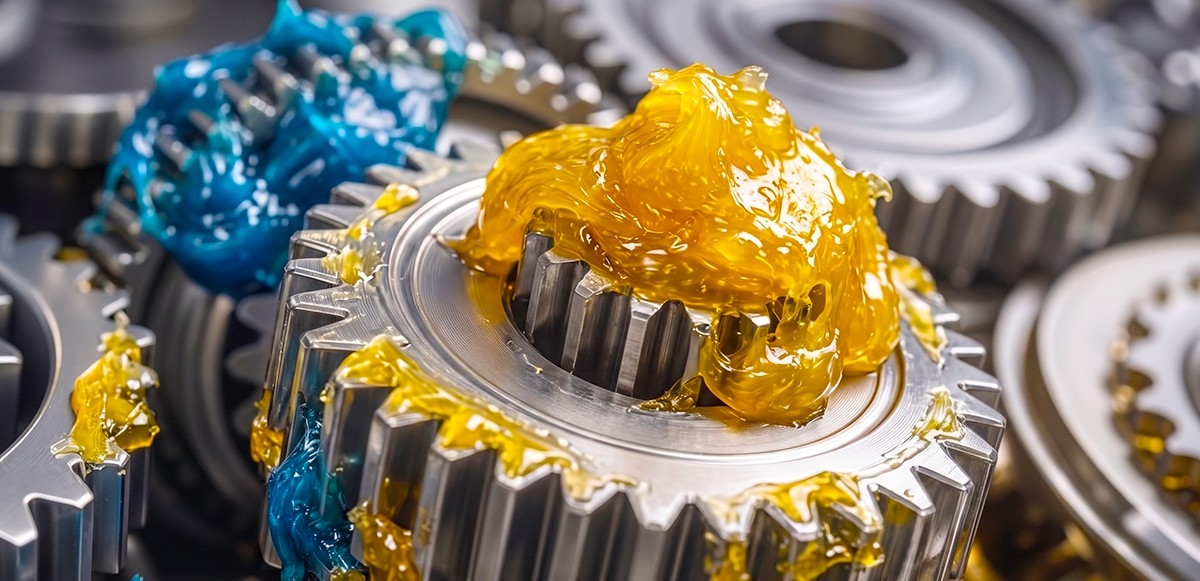
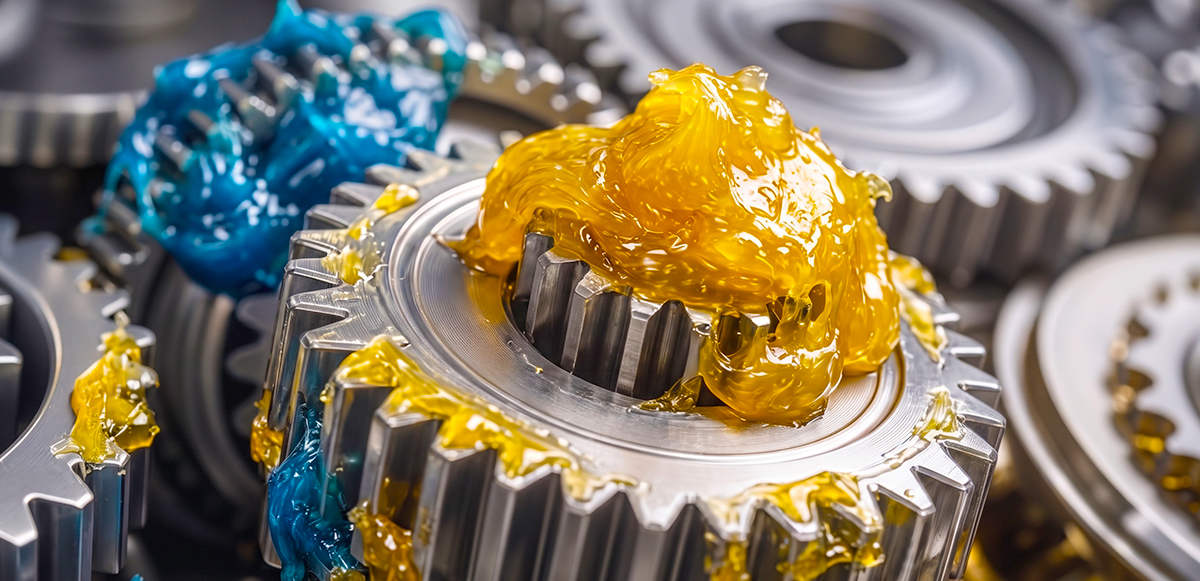
Grease plays an important role in keeping mechanical components lubricated across automotive, industrial, construction, agricultural, and heavy-duty applications. From wheel bearings and chassis components to heavy equipment joints and machinery parts, the right grease helps ensure that moving components receive consistent lubrication where oils may not be practical.
However, choosing a grease lubricant is not simply about selecting a product with a suitable thickness. Different applications operate under different conditions, including varying loads, temperatures, speeds, exposure to water, contamination risks, and operating environments. A grease that works well for one application may not necessarily be suitable for another.
This guide explains the different types of grease, how to choose the right grease for vehicles and machinery, what high-viscosity grease means, and where different Caltex grease products fit within various applications.
What Actually Makes Up a Grease
Every grease is built from three components, and each one determines a different part of its performance:
- Base oil - the lubricating fluid itself. Its viscosity determines how well the grease can separate moving metal surfaces under load.
- Thickener - the "carrier" that holds the base oil in place (lithium, lithium complex, calcium, and others). This is what allows grease to cling to a vertical or overhead surface instead of dripping away like oil would.
- Additives - components added for a specific job: extreme pressure (EP) protection, rust and corrosion inhibition, oxidation resistance, or water resistance.
Understanding Different Types of Grease
Greases are classified based on factors such as their thickener type, consistency, base oil, and additives. Selecting the correct type depends on the operating environment and equipment requirements.
1. Lithium Grease - Lithium-based greases are among the commonly used grease types across automotive and industrial applications.
They are often selected for applications requiring:
- General-purpose lubrication
- Mechanical stability
- Temperature tolerance
- Versatility across different equipment types
Lithium greases are widely used in automotive bearings, chassis components, and general machinery applications.
2. Lithium Complex Grease - Lithium complex greases use a more advanced thickener structure compared to conventional lithium greases.
They are commonly considered for applications where equipment may experience:
- Higher operating temperatures
- Heavy loads
- Demanding operating conditions
These greases are frequently used in industrial equipment, heavy-duty vehicles, and applications where extended grease life may be required.
3. Extreme Pressure (EP) Grease - Extreme Pressure (EP) greases contain additives designed for applications where components experience higher loads and pressure conditions.
They are commonly used in:
- Bearings under heavy loads
- Automotive components
- Industrial machinery
- Construction equipment
The EP additive package greases are designed to reduce metal-to-metal wear when loads spike or shock-load conditions occur.
4. Molybdenum Disulfide Grease - An EP grease enriched with molybdenum disulfide (MoS₂), typically at 3–5% concentration. The MoS₂ particles are designed to bond to metal surfaces, forming a solid protective layer that can supplement the lubricant film during load spikes, shock loading, or startup — moments when a fluid film alone may not fully separate moving parts.
This makes moly greases commonly used for heavy-duty applications such as:
- Construction and agricultural equipment
- Pins and bushings
- Chassis components
- Heavy-load mechanical joints
How Do I Choose the Right Grease for My Vehicle or Machinery?
Choosing the correct grease requires understanding the equipment requirements and operating environment.
Here are key factors to consider:
- Check the OEM recommendation first. Manufacturer specs (NLGI grade, thickener type, any EP or moly requirement) are the starting point.
- Match the load type. Light chassis points can typically run on general-purpose grease; heavily loaded bearings, pins, and bushings usually call for an EP or moly EP formulation.
- Account for the operating temperature. A grease's dropping point and continuous operating range need to cover the actual conditions the component sees, not just typical ones.
- Factor in water and contamination exposure. Wet or washdown-prone environments benefit from greases with strong water resistance.
- Think about consolidation. Where a site or fleet runs many different components, a multipurpose EP grease (like Multifak EP's NLGI 00–3 range) can reduce the number of products that need to be stocked and lower the risk of the wrong grease ending up in the wrong point.
While multipurpose greases are designed to cover a broad range of applications, one grease may not be suitable for every piece of equipment.
Caltex's Grease Lineup
Marfak MP - General purpose grease containing an ISO 150 mineral base oil, an anhydrous calcium thickener and rust and oxidation inhibitors for use in automotive and industrial applications where specialized products such as EP greases are not required. It protects equipment and resists water washout Its mechanical stability minimizes shear down of the grease, reducing leakage from bearings. Its effective oxidation inhibitor reduces the degradation of the base oil in service, to enhance the service life of the grease. Available in NLGI 2 and 3 grades, with an operating range of -10°C to 120°C.
Multifak EP -Multifak® EP greases are multipurpose extreme pressure greases suitable for use with automotive, industrial and off highway equipment applications. A multipurpose EP grease spanning NLGI 00 through 3, which makes it flexible across centralised lubrication systems, automotive wheel bearings, industrial plain and rolling element bearings, and off-highway equipment. The lithium thickener is designed for good pumpability in grease pump systems, low oil separation tendency, good corrosion protection, oxidation stability, water resistance and the range carries several OEM-chart listings.
Starplex EP - A premium EP wheel bearing and chassis grease on an ISO 220 mineral base oil with a lithium complex thickener and tackiness additives. It's built around highway and off-highway automotive use - wheel bearings, chassis points, agricultural tractors, heavy-duty transport - with a high dropping point intended to reduce leakage at elevated bearing temperatures.
Starplex HD 2 M5 - A moly EP grease with 5% molybdenum disulfide, aimed at heavily loaded pin and bushing applications in mining and construction equipment: haul trucks, shovels, excavators, loaders, bulldozers, scrapers, and graders. Operating range is -20°C to 130°C continuous, with short-term exposure tolerance up to 210°C. It's referenced against several OEM specifications and protects even in conditions of severe water exposure, provides suitable flow properties for most centralized lubrication system applications and its high dropping point helps minimize leakage from bearings and good oxidation resistance contribute to long grease life.
Starplex HD 2 M3 - The lighter-moly counterpart, with 3% molybdenum disulfide, for similar heavy-duty applications across construction, mining, agriculture, and transport where that specification is called for. Continuous operating range is -25°C to 130°C.
Between them, the range spans from light general-purpose duty through to heavily loaded, high-temperature off-highway applications — which is really the point: grease selection is less about finding "the best grease" and more about matching the product to the load, temperature, and OEM requirement in front of you.
Can You Use One Grease for All Applications?
Not always - and this is where multipurpose EP greases earn their name. Products like Multifak EP are formulated to cover a wide span of NLGI grades and applications specifically so fewer products are needed across a site. But "multipurpose" isn't the same as "universal." Heavily loaded, high-shock applications, mining and construction equipment, for example, are generally better matched to a moly EP grease, and any final decision should still be checked against the OEM's specification.

Start with the OEM's specification for NLGI grade and thickener type, then match the grease to the load (general-purpose vs. EP vs. moly EP) and the operating temperature range of the application.
Multipurpose EP greases are designed to cover a broad range of applications and reduce the number of products needed, but heavily loaded or high-shock components typically call for a more specialised EP or moly EP grease.
Grease isn't used inside engines or transmissions - those rely on engine oil and transmission fluid. Grease is used on the automotive components that operate outside the sealed lubrication system, such as wheel bearings and chassis points, which is where products like Caltex Starplex EP or Marfak MP are applied.
High-viscosity greases use a heavier base oil, which is generally suited to components under higher loads or elevated operating temperatures, where a thinner base oil could be pushed out of the bearing more easily.
Compatibility depends on the specific bearing, seal material, and OEM requirement involved. The product data and safety data sheets for each grease outline its composition, and it's worth confirming against the equipment manufacturer's recommendation before use.
Heavy equipment and tractors typically combine high loads with dust, moisture, and shock loading -conditions that call for an EP or moly EP grease rather than a general-purpose one. Starplex EP is positioned for agricultural tractors and heavy-duty transport, while Starplex HD 2 M5 and HD 2 M3 are built for the heavier pin, bushing, and shock-load demands of construction and mining equipment. The right choice still comes down to the OEM's specification for that equipment.
General-purpose grease covers lighter-duty chassis and bearing points; EP grease is built for higher-load automotive and industrial bearings; moly EP grease adds a solid-film layer for heavily loaded pin and bushing applications in construction and mining; and high-viscosity/high-temperature grease is suited to components running hot. The "Types of Grease" and "Caltex's Grease Lineup" sections above map each type to the industries and equipment it's typically used in.